I’m Getting Sentimental Over You

“No One Ever Tells You” that with a disability you may live “Moment to Moment” and long for “The Good Times”. “Night After Night” I lie awake with my “Head on My Pillow” and accept that while “I Gotta Right to Sing the Blues” more often than not “I Whistle a Happy Tune” because my Grandma taught me when I was very young that “When You’re Smiling” the whole world smiles with you. 

“It Never Entered My Mind” that I may be “All Alone” for “As Long As I Live” without my one true love.  It hit me hard “Yesterday” that “This Is the Beginning of the End” and that I may have “A Hundred Years From Now” or only “Five Minutes More” to spend time in his company.  He is my strength “Come Rain or Come Shine” and has been by my side “Every Day of My Life”. “Time After Time” being with “This Love of Mine” is “A Lovely Way to Spend an Evening” “Come Rain or Come Shine”.  “He’s My Guy” and life will be “Half as Lovely” without him. “I’ll Never Be the Same” if we suddenly face “The Last Dance”

It would be “Nice ‘n’ Easy” to sit around and lament the passing of “The Days of Wine and Roses” and yearn “For the Good Times”. “I Could Write a Book” as I sit “Among My Souvenirs” and “Forget to Remember” that “It Was a Very Good Year”.  And then I think to myself, “Should I?” “I’ll Never Be The Same” if I start “Learnin’ the Blues” and get lost in a “Melancholy Mood”. 

I refuse to be that “Old School Teacher”, sitting around in “The House I Live In” wrapped up in “My Shawl” looking “Out Beyond the Window” at a “Pale Moon” letting life “Pass Me By”. Instead, I try to “Ac-cent-tchu-ate the Positive” and “Dig Down Deep” “Every Day of My Life” and remind myself that “The Best is Yet to Come”.  “I Sing The Songs” and high kick my way into that “Same Old Song and Dance” because “They Can’t Take That Away From Me”, “This Thing I Love” that is just “Too Marvelous for Words”.  

From “I’ve Got You Under my Skin” to “The Lady is a Tramp” – Frank Sinatra has always been and always will be the love of my life.  His music is forever in my soul and I will always have Frank close to me once my world drifts into silence.

In the words of Old Blue Eyes himself, “May you live to be 100 – and may the last voice you hear be mine.”

It will be, Frank – it will be.

You Miss A Lot.

You miss a lot when you’re hearing impaired. 

I thought – for too many years – that the season of “Lent” was actually pronounced “Lint”, and when I was very young I kept trying to make a connection between the piles of laundry and Jesus.

“Mincemeat Pie” sounded to me like “Mintmeat Pie” – a delicacy that I assumed (wrongfully) was ground hamburger and mint flavoring. It sounded disgusting, but figured that once I grew up I would acquire a taste for this odd flavoring.

At a birthday party in the second grade, we played this absurd and nonsensical game where you put an orange under your chin and passed it to the person next to you using just your head, chin and neck without using your hands.  The game was called, “Pass the Orange”. I heard, “Pastor Orange” – and kept waiting for a priest to appear and join the festivities.

I have perfected the art form that is the personal, ongoing adventure called, “What The Hell is Happening Now?” – a skill set required of anyone with a hearing loss plopped into a world not designed with their needs in mind. I learned at a young age to be vigilant about making eye contact with those around me, to study body language, nonverbal cues, and facial expressions which provided a glimpse about social cues and norms. I learned to conduct a careful, sweeping review of the physical environment around me for any lurking information that may help to “fill in” the missing pieces and therefore prevent embarrassment, confusion or another round of “I’m sorry, would you please repeat that?” which became quickly tiresome.

The combustible combination of a significant hearing loss and inability to pay attention due to exhaustion, boredom or disinterest led to one of my more memorable failures – and reinforced my lifelong disgust for the game of volleyball.

“DeMatteo, DEMATTEO! TAKE A LAP!”  

“DEMATTEO! AROUND THE GYM, AGAIN!” 

 “DEMATTEO – ENOUGH!  START RUNNING – 3 LAPS – AND ADD ANOTHER ONE IF YOU’RE NOT READY TO REJOIN THIS GAME!”

I spent the majority of my middle school career plodding in a half-hearted jog around and around the gym in a perpetual, never-ending loop as a result of a litany of committed infractions during physical education classes.  I managed to single-handedly push the already “angry at the world” physical education teacher clear over the edge with my ongoing antics – but this time, my “Chariots of Fire” montage performance was a direct result of my hearing loss.

It was volleyball day.

I failed to hear and understand the directions (again) because I wasn’t paying attention (again) and because the acoustics in the gymnasium caused sounds to bounce, echo and reverberate all over the walls making rapid information processing nearly impossible.  I was already feeling defeated because I couldn’t understand what was being said, and I just didn’t have it in me to raise my hand (again) and ask for information to be repeated and explained (again). I stood towards the back of the group, adjusted my socks, watched the clock, and prayed to any deity that was listening to set the building aflame to hasten the end of the hell that was this gym class.

The group broke up into teams, and we moved towards opposing sides of the net. I mentally ran through every bit of background information I possessed about the game of volleyball to try and determine what other bits of knowledge I needed to glean from fellow students and the action of the game to participate and not make a spectacle of myself.  I figured this game couldn’t be that difficult – it involves a ball and a net, the ball needs to move over the net, and there seemed to be some yelling, though what people were yelling about escaped me in the moment. As the game got underway, I employed my usual strategy of shuffling to the back and waiting out the prison sentence that was this gym class.

I missed that players actually had to shift and shuffle in formation every damn time the other team dropped the ball (or was it after a certain number of minutes? I still don’t know!).  This lack of information disrupted what I considered my foolproof “hide in the back” strategy. I also failed to comprehend that at some point each player would have possession of the ball and would be required to yell out the score of the game before whacking this monstrous sphere over the net to the opposing team.

I should have paid attention. I should have asked clarifying questions.

My prayers went unanswered, the building was not engulfed in flames, and suddenly I was solely responsible for lobbing this ball over an impossibly high net.  I recalled that when other players were in my current position, they yelled out some numbers. I frantically searched my mind, trying to decipher if there was a pattern to the numbers that I had (sort of) heard being yelled aloud.  I came up with a thinly veiled and wildly inaccurate theory that everyone yelled out their own numbers – numbers with personal meaning! These numbers must be an individual expression, a rally cry of sorts, to embolden you to move this ball in a perfect arch over that imposing net!  

I took a deep breath, geared up, and yelled “87 serving 92” with such gusto – my own perfect numbers – the year that it was (1987) and the year I would graduate high school (1992).  I whacked that ball, it made it over to the other side, and I felt pretty damn proud of myself for once again “faking and making it” in the hearing world!

I was met with silence, stares, a few giggles …and the ear-splitting screech of a whistle.

No one told me I was supposed to be keeping track of – and then yelling out – the score of the game.

The barrage that then flew out of the mouth of my already disgruntled teacher, who believed that I was put on this earth for the sole purpose of raising her blood pressure, was nearly indecipherable – and, to be honest, one of her best fits yet:  

“DEMATTEODEMATTEODEMATTEO!!! WHAT WAS THAT?! WHATWAS THATWHATAREYOUDOING! DEMATTEOTAKEALAPANDANOTHERLAPANDANOTHER! IT WAS THE SCORE, DEMATTEO – WE NEEDED THE SCORE! STARTRUNNING!!!”

This time I took off running at a faster pace than normal, eager to escape the prying and judgemental eyes of fellow students, and desperate to be on my own once again – because at least when I was running I knew what was expected.

You miss a lot when you’re hearing impaired.
Speech Therapy.

“Julie? JULIE?” came the voice from the classroom doorway.  I silently stood, head down, and picked my way as quickly as I could without stumbling over someone or something to the doorway.  My hair always hanging over the sides of my face to hide my flushed cheeks, the embarrassment and anxiety rising in my chest. I hated leaving social studies lessons, science projects and spelling tests.  I hated that my teacher wouldn’t say any words of reassurance to me such as, “Don’t worry – we will save some of the material for you to do your own experiment later on today” or “We can make up the spelling test – I know you have a few more words left.”  I hated that my classmates would silently stare at me as I left the classroom to head towards the torment that was speech therapy while they got to stay behind and carry on as typical students, their lives not being overrun by a disability. And I despised the Speech Therapist. Oh how I despised the Speech Therapist, with her veiled attempts and efforts to manage a hearing impaired student that was one of the first Special Needs students to be included in this particular public school district. 

I was a trailblazer in the public school system where I attended elementary school.  I began Kindergarten in September 1979, 7 years after the creation of Chapter 766, the law that formed the basis for Special Education reform in public schools.  The creation of Chapter 766 had a million hallmarks, but for the purpose of this discourse the following are of most importance to my case: increase of inclusion, flexibility and equity for Special Needs students and the consideration of all characteristics and needs of a student to realize their maximum educational potential.  The public schools in Massachusetts were given a 2 year implementation window to prepare for inclusion and enactment of these new regulations. The true activation date of Chapter 766 was September 1974 – a mere 5 years before I was enrolled in public school. Unfortunately, I showed up in September 1979, and not much had been put into place to ensure my transition into public school – and this Speech Therapist was Exhibit A in the disaster that was my early inclusion education.

Mrs. S was a short, rotund woman who preferred ill fitting skirts and too small shoes. Her feet would puff and roll off the sides of her high heels that clacked and clanked at a crisp staccato that even I could hear a mile away.  Her hair was an indescribable color of brown/black and lacquered to perfection with what must have been countless cans of Aqua Net hairspray. 

We had a Christmas ornament that we hung on our family tree each year when I was a child of the cartoon character, Petunia Pig.  I have never said this outloud to anyone before now, but each year I would hang that ornament on a branch and think to myself, “Oh – there goes Mrs. S., up the tree.”  There is no other fitting description of this woman – it is sadly accurate.

Mrs. S. did not have fingernails, she had talons that punctuated every point she made as she spoke out loud, forever stabbing the air as she gestured to indicate the vast importance of what she was speaking.  Those heinous talons were painted a shocking shade of orange – best described as “1973 shag carpet orange”. Mrs. S. also perpetually smelled like an Italian sub and is the reason why I cannot smell or stomach salami, and her breath reeked of pickle brine.  (All these years later, and I am chewing a piece of peppermint gum as I compose these sentences to eradicate the rising nausea triggered by these memories).

Mrs. S. would escort me to a tiny closet-sized room near the boiler room of the elementary school. It was unseasonably warm in that space regardless of the time of year, and the persistent humming of the boiler provided an unwelcome accompaniment that made it nearly impossible for me to hear, understand and participate in the hell that was my speech therapy sessions with smelly Mrs. S.   

I reluctantly resigned myself to the fact that I needed to just “do my time” in this session, and set myself on to the cold metal folding chair that was “student seating” in this laughable “office”.  Mrs. S. would heave herself into a rolling leather chair, and would tell me to turn my chair around so my back was to her. I would sit, legs swinging, and stare at the concrete wall searching for shapes in its cracks.  Then our “therapy” would begin.

Mrs. S. would start to read lists of words and I was expected to repeat them back to her.  With my back turned. Let’s recap – I am hearing impaired, wear two hearing aids, rely on lipreading…but I am sitting with my back turned and am expected to repeat words back to old pickle-breath back there.  

I rank this experience in the top 25 of the “Most Stressful Experiences of My Lifetime”.  Mrs. S. would start of with a list of words with sharp enough syllables that I could decipher including “hotdog”, “cowboy”, and “sunset”.  Then that sly beast would start throwing in some words that were nearly impossible for me to comprehend when I was facing forward, but completely unrealistic for me to repeat with no visual cues to support me – words such as: “seat…sleet…sit”.  I would feel my eyes start to prick with hot tears, holding them back mightily while I did my best to repeat what I thought I was hearing, in an effort to please Mrs. S. so I could get the hell out of this dungeon and back to my classroom. 

My success rate was not very high, which should not come as a shock – but instead of abandoning this fruitless exercise, Mrs. S. would rise in her level of frustration and repeat the stimulus words louder and louder.  I would repeat what I thought I was hearing over and over again – desperately guessing at what other words could possibly match the phonics patterns she was saying so I could end this torture. It inevitably escalated to Mrs. S. yelling the words incredibly loudly, me still not getting what she was asking me to do because the words were taken completely out of context, and it all would end abruptly without warning because our “time was up”.

I was fortunate enough to have had brighter spots in my educational experience that overshadowed these disastrous speech therapy sessions including instruction by Speech Therapists Margaret Reade and John Deming when I was in middle school and high school.  Additionally, I have had the good fortune to teach alongside some remarkable Speech Therapists that have renewed my faith in appropriate therapies for students with and without hearing loss.

I am grateful to Mrs. S. in all of her offensiveness because she inspired me to become a teacher of students with exceptional needs – and led by example of how not to treat students with disabilities.

Here Comes the Rain Again…

My right hook struck his jaw with a satisfying “thwack”.  I probably should have felt worse about this while I sat sullenly in the principal’s office, but I didn’t.  He started it when he pulled out that water gun and aimed for my left hearing aid while we were waiting to enter the middle school.  I felt the splash of water, heard the tell-tale and unwelcome “crackle” – an indication that I was soon going to be on “half power” if I didn’t make a hasty repair.  My motion was sudden, fluid, and filled with a rage that has rarely been awakened in me before or since – and I swung, confident that I would hit my target and inflict the same level of punishment that had just been done to me – whether deliberately or in jest, it didn’t matter.  

The weight of what I had done paled in comparison to the ever rising anxiety I had about the moisture that had landed squarely inside the “computer parts” of my left hearing aid.  I knew I needed to get my hearing aid dried out and that time was of the essence, but this was delayed by my impromptu visit to Mr. Hibbard’s office, again. This kindly principal that, by the end of his tenure at the middle school, had seen me more than once for a variety of infractions – usually for “disturbing the peace” with my lifelong friend Natalie, who absolutely earned this mention – but this time there was a heaviness to my appearance in his office.  My memory is blurred by age, but I do remember that he was responsive, understanding and (possibly) on my side this time. The school nurse offered me a hair dryer, I did what I could to dry out my hearing aid, and returned to class.

I hate water. 

It is the single, most vicious, and ever-present enemy of hearing aid wearers around the globe.  The attack of moisture comes in many forms – often without warning – rain, ocean spray, perspiration, snow, splashes from puddles – and, of course, my classmate’s ill advised “squirt gun”.  The tiniest bit – far less than you would think – has the ability to inflict such significant damage to my hearing aids that it has led me to a life of vigilance that borders on obsessive when I even suspect that the slightest bit of water is in the vicinity.

The weather report calls for “heavy rain” – the “Julie Report” calls for a heavy, waterproof rain coat with a snug fitting hood pulled forward and tied with vinyl drawstrings. My face grows warm, my hair devolves from perfection to disheveled, my hearing aids are screeching with feedback as the rain lets loose its violent attack.  I consider, for a moment, removing my hearing aids and placing them into my pocketbook for the mad dash across the parking lot to my place of employment. My logical mind understands that they will stay dry, but the shrill hysterics of my overprotective mind launches into a litany of reasons that they should remain in my ears – with their wailing pitch – because I might fall and drop my bag, the bag could spring a spontaneous leak, the bag has a secret hole in it and my hearing aids could drop into a puddle…the list goes on and on.

A boat ride with friends and family in Siesta Key down the Intercoastal? Wonderful!  It was literally smooth sailing until the rain began to pour from the sky. I was then met with a chorus of alarmed companions yelling, “JULIE! IT’S RAINING!” in a panicked effort to ensure that I *knew* of the horrors falling from above and that I take immediate cover to protect my hearing aids.

“Do you want to build a snowman?”  No. Absolutely not. The perils of snow are worse than rain in its unpredictability. It could make a direct hit, it could miss, or a snowball thrown in jest could land squarely on the delicate microphone at the top of the hearing aid and destroy processing abilities in a matter of seconds.

(And by the way? Mark and I will never be one of those couples that washes the cars together and then playfully pick up a hose and squirt one another.  And that has nothing to do with my hearing aids – water damage aside, it is just stupid, cheesy and cliche.)

I do, however, revel in the joy of swimming in a pool – or, in my case, floating on a noodle in the shallow end.  My “ears” are out and I can hear next to nothing. I look up at the blue sky above and feel the warmth of the sun. I close my eyes and now there is nothing but stillness, my own thoughts, and Frank Sinatra’s music playing my own private playlist in my mind. It is the closest I have come to complete peace without the use of substances (I’m kidding, Mom! Sort of…).

A glance out the window this morning shows clear skies and a bit of a chill in the air with rays of sunshine illuminating the early frost on the grass.  I prepare for the day as I add my umbrella to my pocketbook, consider gambling with not throwing an extra raincoat in the backseat of my car, and wonder if this old eyeglass case could come in handy as an emergency “stow away” container for hearing aids during unexpected water assaults.

It has been 37 years since I threw that punch – and I still feel justified. 

My dog is named “Rocky”, after all –

Meetings.

It was a serious meeting, about a serious topic, and I was sitting in a very serious position listening to the very serious speaker.  The woman to my left had finished shoveling handfuls of miniature pretzels into her mouth and decided to fiddle with the bag…she twisted and twisted that crackling, crinkling bag over and over again.  Her endless manipulation of that goddamn pretzel bag became the only sound that my hearing aids were registering – and, therefore, amplifying. My level of frustration continued to rise and I suddenly snapped.  I reached over and in one seamless motion I ripped the bag out of her hands and threw it on the floor beside me. The speaker momentarily paused and glanced at me with a mix of amusement and horror on her face – as I sat once again stone faced and refocused on the very serious speaker delivering the very serious information.

I hate meetings. 

Unfortunately, my profession requires that I attend meetings…frequently.  All kinds of meetings: large meetings, small meetings, meetings around rectangle tables, meetings in important looking rooms with inspirational posters on the wall, and my favorite types of meetings – those that should have been an email. 

I always arrive to a meeting at least five minutes ahead of the actual start time because I need to be primed and ready to play my favorite game, “Where The Hell Do I Sit?”  The approach I take to determine where I sit functions at a level of military precision that would make Patton blush. I sweep the room with a gaze, I consider my sight lines from all possible angles, I contemplate the acoustics, and when I have honed in on the perfect spot I swoop into the seat with definitive authority. (And then I wait…because now I’m early and have no one to talk to…so I do that awkward thing of inspecting the point of my pencil, dash off a “serious email” to someone, pretend to study the handouts…the usual).

Most of the time, I get lucky because the environment is set up in such a way that it is clear where the center of the meeting will be happening – either the facilitator, presenter, or panel of persons has demarcated their space.  This assists me with my decision making when determining the best possible seat that will place the majority of the incoming information to my left ear (relatively stronger ear, by a narrow margin) and will simultaneously allow me enough of a focal point so I can lip read to back up what I am hearing.  I despise the “open concept” meeting space – when there is no clear spot as to where the action will be happening – either by design or by disorganization, this is the worst scenario for me to walk into because now any seat I pick may or may not be the one for me – if I wanted to play these odds, I’d go to Vegas and let it all ride on the roulette table.

I applaud those that conduct meetings from the front of the room when the chairs are arranged in neat and tidy rows.  I sit in the front and it is marvelous! I know there will be plenty of room up there because no one else wants to sit in the front!  This frees me from having to make a calculated decision and it is glorious! The meetings conducted at large square or rectangle tables, while not my favorite, at least have defined corner space. I can position myself at a corner and be able to pivot and swivel from side to side to catch all that is happening around me, though I do need to lean forward or lean back a little more frequently to make sure that I can see everyone’s faces.  If I have to sit at a table, round or oval is best because it eliminates the angles of positioning to lip read that I have to awkwardly engage in when I am at a table with corners. 

There is a meeting configuration that I despise more than Notre Dame Football – and for those of you that know me, you know this is serious – when long rectangle tables are “sprinkled” around the room and the speaker is going to “roam about” and “check in” with groups between presentation slides…because we will be “turning and talking”.  

NOPE.   

Do not turn, do not talk, do not roam – there is nothing to say or overhear from any of these “collaborative conversations” – because no one is talking about the “curious question” the well-meaning presenter has posed. The “group discussion” easily devolves into such riveting topics including lip gloss, crazy neighbors, the weather, or general bitching about not wanting to be in this meeting in the first place.  I am now forced into an already uncomfortable position of leaning forwards, backwards, twisting, turning and leaning to try and follow even a little bit of what the presenter is saying during their little trip around the meeting space. This is then compounded by the eruption of “collaborative conversations” (which we all know is nonsense) that creates background noise making it impossible for me to even hear, nevermind participate in, the useless discussions about wrinkle cream, parking passes, protein shake recipes, and that witch in Human Resources.  I become easily fatigued, and am now forced to sit there with a fake smile plastered on my face. I nod and smile or emote in some disapproving fashion in what is hopefully the right moment, and pray to any deity that is listening that the presenter will not ask me what our group discussed during our “unpacking opportunity”. It’s a good time.

It was at one of these extra special free-range meetings when I found myself on the receiving end of one of the more insulting and demeaning experiences I have had as a person with a hearing loss.   I remember that I was turned away from this particular colleague and reviewing notes I had made on my computer to cross reference later against the handouts to help me ensure that I was capturing as much of the “big picture” as I possibly could in the seventh circle of hell that was this meeting formation. 

There was a flash of motion just within my peripheral vision that was startling enough to cause me to turn my head to the left – only to be met with the visual of a colleague snapping their fingers at me while shouting my name, “JULIE! (SNAP) JULIE! (SNAP)!”  I remember pausing ever so briefly thinking, “no…this can’t be real” – but it was very real and very, very rude. I was fortunate that I had at least one witness to the absurdity of it all – but I still cannot believe that it happened.

I was then forced into a position that most disabled people find themselves in from time to time – having to decide how to respond…do I assume the “Angry Advocate” pose or do I go with the, “Joking Disabled Pal” position.  I went with the, “Are You For Real!?” persona – I turned to the offending party, and said “Did you seriously just snap at a person with a hearing loss? Seriously?” The response? “I called your name twice.”

Let’s brainstorm, gentle readers – think for a moment…what other strategies could you have used to get someone’s attention BEFORE resorting to !@$^# snapping?  Hmmm …a gentle tap on the arm, alerting another person at the table to please tap my shoulder, passing a note, sending me a text message on my phone, a small discreet wave in my peripheral vision…notice that NONE of them involve snapping! 

The snapping action – beyond being blatantly rude and degrading – implies that I am “less than” in the eyes of the person committing the action. The snap sends a message that I am not competent enough to be independently aware of the world around me and obviously need to be communicated with in such a forceful manner.  It becomes obvious to me that because of my disability, snapping must be the first and only strategy to employ because to offer me the respect of another form of gaining my attention is not worth your efforts.  

Ask yourselves – and answer truthfully – if you were going to get the attention of a typical hearing person at a table, would you snap?

 I didn’t think so.

The Yucky Part.

A terrifying thought creeped up to my consciousness today – a truth that I try mightily to keep buried deep down – but it is a realization that I need to come to terms with sooner or later. It pains me to even type this, and is even more frightening to share this in such a public forum as I am typically a very private person that would prefer to laugh about this absurdity than engage in an emotional exchange about this incredibly serious situation. 

This is it. This is as well as I am ever going to hear for the rest of my life, in this very moment, because tomorrow I could wake up and more of the already fragile nerves deep inside my ears may have deteriorated further with no chance of recovery. 

 I am not going to get better.

This is the ugly side of having a physical disability – the anguish, intense pain, fear, anxiety and sorrow.  This is not the side that I show to the public, and have spared many people close to me – because it is uncomfortable.  It leaves me open, broken and vulnerable which is not in alignment with my headstrong “alpha female” personality – but I have decided that the time has come to unveil the “yucky parts” of my experience as a disabled person.

As you read this, you may feel uncomfortable by the unveiling of such intense actualizations because you are “typical” or “intact” and cannot relate to my experience or the experiences of others with physical disabilities.  Instead of confronting and acknowledging the fear and emotional toll that this physical disability takes on me, you may prefer to remain in your position of holding me at an arm’s length and admiring from a distance as though I am a museum piece to be marveled at as opposed to be understood.  You want to avoid the deep dive into the discomfort, the emotions, the internal battle – you would prefer that I remain an inspiration, a disabled person to be praised and held in high esteem in all I have achieved with this disability.

I hide my fear and sadness behind a million “tricks” that you may not even realize I am doing with such accomplished sleight of hand.  For example, I may beg off and leave a neighborhood party claiming that I have school work I need to finish – when, in reality, I am noticing that voices are becoming harder to hear and with the sun setting, the light is dimming, and my lip reading accuracy is going to diminish quickly as the sky turns dark – so best to leave before I become frustrated.  Or, I may decline a social invitation to an event I would have liked to have attended but the anxiety of meeting new people and having to explain how best to communicate with me just feels too enormous. I may busy myself with a book or become overly interested in reading an article on my phone in a crowded train or restaurant to avoid interactions with others in a public space because the noise is too loud and the environment too chaotic for me to manage.  The list goes on and on – with new routines being added to my repertoire as my hearing declines.

I dread taking my hearing aids out at night now – I have minimal residual hearing left without my hearing aids inserted and turned to the “on” position.  The world is quiet for me now – too quiet. My mind, which should be quieting down and preparing for rest – suddenly starts humming and buzzing at a faster clip than you ever realized possible because the reality has hit once again – you have lost more noises.  You can no longer hear a door slam, or the floor creak, or the faint buzzing of an alarm clock. As the buzzing and humming in your brain begins to crank with increasing rapidity, your heart rate begins to climb and your anxiety about what is happening biologically inside your ears comes to the surface – you fight it all back, once again, desperate to not confront this monster hiding under your bed – not tonight.  The bees swarming around in your mind continue their steady hum long after you have distracted yourself by putting a load of wash in the washing machine, paying bills, or rearranging the toiletries on your dresser. There are just some nights when nothing helps stop the forward march towards your very uncertain future.

No one talks about what happens next – I don’t even want to talk about this, because it is an admission of fragility – but the tears start to fall.  The ugly cry. That heaving, wracking, sobbing, red faced messy crying because you are beyond overwhelmed and terrified and there is simply no other release to allow even a momentary freedom from the terror of losing your hearing completely.  In a matter of moments, my eyes are dry and caked with salt from my tears, my face is blotchy, red and hot to the touch – (and, admittedly, on a particularly dramatic day I may throw my arm across my forehead and feign a fainting spell). It is just awful, heart wrenching, and unpleasant – but surprisingly cathartic at the same time.  

It’s awful.  I have tried to keep these meltdowns when the inevitability of my world becoming silent feels too much to bear private, but it is time for it to come forward and be made public because the truth of the matter is that I am scared to death.  I am petrified. I feel isolated and alone – and I can no longer keep up the facade that I have maintained for the last 45 years that “all is well” and my hearing loss is “no big deal”.

I am not going to get better – but I am going to be fabulous.

(And so help me if any of you interpret this blog post as an invitation to my “pity party”)

Seasonal Affective Disorder: Inside Julie’s Ears

I have sparkly hearing aid molds. They are amazing…and ordered from the children’s catalog, much to the horror of my audiologist who eventually acquiesced and let me have a little bit of fancy!  (I am obsessed with Cher and Ava Gardner – and I have decided that if they had to wear hearing aids, they would have some serious glitter…keep your judgments to yourselves..) 

As fabulous as these molds are there is a completely disgusting side of wearing hearing aids day in and day out that no one ever really talks about in polite company. As we know, I have little regard for societal niceties, so get ready for a trip down the canal of disgustingness. (Oh, and if you’re the “squeamish type?” Too bad – keep reading…I have to deal with this nastiness, the least you can do is learn a thing or two!)

The unassuming, delicate and sensitive skin inside my shell shaped, perfectly formed ears plays host daily to unwelcome visitors – my hearing aid molds.  For the curious, hearing aid molds feel like well-fitting and very tight ear plugs that you may wear swimming…except that you are wearing them all the time, in all kinds of weather, with minimal opportunities for relief.  

The time has come for my bi-annual internal argument with myself about which season is the worst as a hearing-aid wearer: Hotter Than Hell or I Can’t Feel My Feet (the two seasons of New England).  My ears are constantly plugged up like a storm drain regardless of what is happening outside, but every shift of season triggers a litany of complaints and physical discomfort as my poor ears prepare for the onslaught of ailments presented by extended weather.

The arrival of the extreme cold – that biting air that chaps your lips, burns your corneas, and turns your cheeks a shade of crimson – wreaks havoc on the inside of my ears. It is a misconception that the molds offer some type of protective barrier as this is most decidedly not the case.  I remove my molds at the end of the day and the level of itchiness that springs forth is often too much to bear, and by mid-winter it takes every ounce of already waning self-control to not attack my ears with the ferocity of scratching typically reserved for horrendous bug bites, chicken pox, or poison ivy (technically all things you probably shouldn’t be scratching in the first place!). I can rub and massage the interior skin of my ears all I want, but the relief is so short lived that it’s almost cruel.  I inevitably grab a cotton swab (Q-tip) and launch an attack which then triggers the flaking. I’ve often looked at this horrific dry skin falling out of my ears and imagine what it looks like and how I could describe this to someone that has never had the distinct pleasure of experiencing this delightful phenomenon. I have, so far, come up with this non-exhaustive list of descriptors: small snowflakes; oatmeal crumbs; protein powder; crushed aspirin; cheap off-brand sugar; talcum powder; and wood shavings from a hamster cage.  It’s gross. I know its gross – but in all of its disgustingness, there is something inherently satisfying in attempting to illustrate it for the non-sufferers. #sorrynotsorry

There are a few remedies that I rely on in the winter months for some extended relief, however temporary. The first is a warm washcloth – not too hot, not too quick to cool – to massage the interior of my ears.  It instantly soothes the angry, inflamed skin and on the freezing days, warms me up from the inside out. My ears turn a really cute and fashionable shade of pink, however short lived. 

The second is the slimy, cooling, and understated powers of hydrocortisone cream.  This magical poultice is applied in a thin coating to the delicate membranes of my ears, magically moisturizing the irritation and providing near instant calm and relief to my tired, tortured ears.  The flip side of this is – of course – the collection of goo now residing inside my ears. It is disgusting. Want to experience the sensation for yourself? Wet some play dough, dump some slippery dish soap on the top and stuff it inside your ears – that’s what it feels like…totally disgusting. Productive, relieving and comforting – but beyond disgusting.

And then, before you know it, Hotter Than Hell arrives – and, much like my curly hair, my ears go positively wild. The insides of my ears instantly transform into the itchy, inflamed flames of fire just flicking the already irritated skin that has barely rebounded from the winter months.  Oh summer, I love you but the damage you inflict on my poor, bastardized ears is just cruel. The itchiness is horrendous, but now there is discharge that pour from my ear canals each night when I remove the hearing aids. I deal with weeping of clear fluid which is temporarily halted by the ever useful facecloth – cooled by colder water this time. Once again, comforting – but not for the sensory defensive –  magic balm, hydrocortisone cream. I know that Q-Tips get a bad rap, but when your ear canals are blocked with ear wax and screeching in itchy agony – to hell with conventional wisdom of “not putting anything bigger than your elbow” into your ears! There is nothing more satisfying than relieving that awful itch and removing some of that gunk that has taken up residence than with that cotton swab serving as a pointy little shovel.

And now, I brace myself – for I can feel the weather turning. I have readied my trusty pile of face cloths and industrial sized tubes of hydrocortisone. My new package of Q-Tips are open and poised for action. And now we wait…to do battle, once again, with the fury of a New England winter.

And one last word on the topic of Q-Tips being frowned upon, banned and railed against…I will continue to use them faithfully and with gusto! Why would I stop? Because of the risk of hearing loss? People, please.

Closed Captions…Like Boston College’s Football Program…Subpar and Considered Acceptable By the Majority…(Yes, I am in a MOOD after that game last night!)

I am yet to encounter anyone around my age in the last few weeks who hasn’t gleefully spewed out, “OH MY GOD! DID YOU HEAR THE NEWS!? NETFLIX IS RELEASING THE DARK CRYSTAL: THE SERIES!”  That very loud, animated, and overly excited share is met with silence from me…and The Look. (Those of you that know me very well know exactly The Look I am talking about – that mix of disgust, disdain and judgment that I cannot hide, no matter how hard I try…That Look.) The Dark Crystal Crazies can not even begin to understand why I’m not sharing in their confetti throwing and ribbon dancing – well, let me explain with a barely even, measured tone: I. Hate. The. Dark. Crystal. 

I have two of the most amazing, loving and adventurous parents ever – and they were constantly dreaming up new ways to keep us kids entertained while simultaneously providing different types of life experiences.  I am not clear as to how old I was, but I am guessing that I was somewhere around 10 years old. My well-meaning parents decided one summer night while we were vacationing on Cape Cod to take us to the drive-in theater!  A totally awesome and novel throw-back to time gone by that was almost seductive in its smells of popcorn, cotton candy and car exhaust. All felt right with the world for an instant as I sat in the big blue van waiting for the move to start…such glorious anticipation of seeing a story come to life on that giant white screen…and then The Muppets came.  

Those goddamn Muppets.  The speakers were crackly and old which was bad enough…but for a kid that requires support from lip reading to completely understand conversation and follow a storyline…THE GODDAMN MUPPETS DON’T HAVE LIPS! Ever try and lip-read puppets? It’s not pretty.  The addition of captions or assisted listening devices didn’t exist way back in the mid-80s. Sadly, the options that are offered in today’s theaters are equally unreliable and inefficient, but that is another blog post (or book) on its own. I was left with no options to enjoy this movie as my frustration level began to rise. I retreated to the back of the van with a book and a flashlight, feeling dejected and excluded.  It was a sad and blatant reminder of my ever present “otherness” – regardless of how much I pretended that it wasn’t true, that I was “just like everyone else except for my hearing aids”.  

The inclusion of captioning has now become more commonplace on television, Netflix, On-demand movies, YouTube videos…the options have increased, though it is not a perfect system.  But we have to talk about the fact that I swear there is someone like me, with compromised hearing, either typing or managing those things…especially on live TV. We can do better, believe me – 


I was watching the news one day, and the reporter said, “The Dow dropped twelve points today”.  The caption that supported this on the bottom of the screen read, “The Dowser drot to elves too hayd.”  You can’t make this up. Put on live television and select the caption option to see for yourself the absurdity that is being passed off as an acceptable accommodation. I am fortunate enough that I can hear most of the words that the reporters or whomever is speaking is saying, which supports my ability to put together a clearer picture of what is happening, but not all hearing imparied people have that ability.

The non-live options for television shows, movies and the like are also not super helpful to those of us that really cannot hear all that well, either.  For example, I was watching a television show and there were no words being spoken during a particular scene, but there was background music. The ever helpful caption stated, “light jazz melody”.  Umm…this doesn’t help those of us that have NEVER HEARD MUSIC BEFORE! Nope. Thank you for the effort, but it would be better off to flash the message: “NOTHING IS HAPPENING NOW. GOOD TIME TO GO TO THE BATHROOM.”  I appreciate the attempt to offer some sense of a “playing peaceful melody” or “crashing of ocean waves”…but it is really not helpful if we have never heard those sounds.

And so I soldier on, hoping for continued awareness and improvement in assistive technology for the hearing impaired.  And – for the record – I’m not watching “The Dark Crystal”, even with captions! 

The Social Situation Navigation…And Those People…

I love people, I love to talk, and I love a party!  I really enjoy meeting new people, hearing about others’ experiences, and maybe even picking up a few new friends along the way.  But – socializing, for me, is a lot of work – particularly when I am in a new situation with people that I have never met. There are very real limitations and parameters that are placed upon me because of my hearing loss when I find myself in a social situation.  The amount of work that is required on my part to successfully participate in and enjoy social gatherings is often hidden and unknown to others, and it is not what you might think – it is not “the background noise” of a loud room. It is far, far more involved as I will outline in today’s blog post.

The volume and background noise or even the physical set-up of the environment is challenging in its own right, but fortunately, as an adept lip-reader, I can successfully “fill in the gaps” of conversation that I may have been missing because I am watching your facial expressions and body language.  The factors that actually cause more stress and have a larger impact include some of the following: facial hair…tongue rings…weird looking lips…excess makeup…plastic surgery…Botox (your face literally doesn’t even move so I have no idea of your reactions)…accents…talking with your teeth clenched…false teeth…speaking with your hand over your mouth…excessively touching your face as you are talking to me…turning away from me while you are talking…too many people in a crowded conversation huddle…and it goes on and on and on.  My eyes are my toolbox to support my ears – I am hearing something, but the eyes are my back up. I have to be able to see your lips moving, your facial expressions and your body language to help me piece together an entire conversation.

The next level of social jockeying comes when I am in a crowd of people with multiple participants in the same conversation – it is impossible to lip read everyone at once, and the rate of conversation is quite rapid.  I often “miss the joke” and laugh along with everyone else so I can still keep up the appearance of being part of the group. Unfortunately, most of the time, I have no idea exactly what is going on – and I am looking for an opportunity to get out of this disastrous configuration.  I also have to be constantly on the move, positioning myself out of direct lights that may be getting in my eyes thus increasing the difficulty of lip reading or positioning myself towards people so I am close enough – but not too close – to engage in dialogue. (Never want to be too close, no one likes a “close talker”).  To add to this level of fun, I am always trying to position people so they are on my left side, which is my relatively “good ear” – (which makes me laugh because, let’s face it, they’re both pretty awful at this point!)

And then…The Speech.  How I DESPISE the need for The Speech – there is no other way to describe this agonizing yet necessary announcement than it is literally “coming out of the disabled closet”. I have to disclose the hearing loss – especially when I meet new people, all in the name of avoiding social awkwardness. I like to put all the awkwardness up front, and state something that usually goes like this: ““Hi! My name is Julie, nice to meet you – just to let you know I wear two hearing aids and I may need things repeated, but I will let you know if I am having trouble hearing you. Thanks!”  Oh how I hate The Speech. I often wish that there was a more effective way to circumvent this whole thing – perhaps the host of the party could send out an email with my photograph and a printed version of The Speech? Maybe a brochure could be handed out at the door, like a fancy program you would receive at a classical music concert or musical? Maybe business cards? Anything but The Speech! I dance on a thin line between wanting to let people know my situation while sometimes all I want is to be able to walk into a room and “be typical”, even for just one night, a la Cinderella at the ball.  I just want to be seen as a “person first” not as a “disability first”, which inevitably happens once The Speech leaves my lips.

Because…once The Speech has been spoken aloud…I guarantee you that the following reactions are consistent across every social situation I have been in – do you recognize  yourself in any of these? 

Reaction #1:

The dumbfounded, blank, and awkward stare after the Disability Announcement.  This is when people are encountered with someone that they do not consider “intact”, and literally do not know what to do, say or where to look next.  For a few moments, I have been regulated to the level of a zoo animal and the desire to make an elephant trumpeting sound is very, very difficult to contain within my impulsive nature.

Reaction #2:

This person tries to break the awkwardness that they would swear they didn’t have with a joke in poor taste, usually by saying, “What?” and supporting that with a hearty guffaw.  (Yeah – you’re a comedic genius, pal – never heard that one before…so original.)

Reaction #3: 

And the worst one…the worst…is when people mistake my necessary advocacy and friendliness for sudden familiarity and any attempt at socialization quickly turns into the 7th circle of Hell. These are the people that have earned the top spot on my annoyance list, and rightfully have their own subsections as listed here.  I have additionally included the responses I would like to give in return, but am always unable to because I find myself in polite company and need to follow the social boundaries of acceptable interaction – trust me, it pains me to no end.  

Here we go: 

The Curious Questioner

This is the person that says things like, “Oh! When did you lose your hearing?” 

My response in my mind: “Oh god, it’s lost again! Where did it go this time…wait a minute, I thought I saw it next to the car keys on the tray table in the living room…excuse me…” 

The Do-You-Know-So-and-So

This person drops this gem, “I have a friend whose cousin’s daughter’s roommate is Deaf – do you know her?” 

What I desperately want to respond: ‘Yes, we have a directory, an email address book, and our own Facebook page – we sit next to each other and share a donut on the first Thursday of every month at our ‘I’m Deaf And That’s OK’ support group.”

The I Have Disabled Friends

These well-meaning poor souls have to drop something like this: “Oh! My best friend from Kindergarten is in a wheelchair!” 

What I stuff back into my mouth: “Really…Tell me more about how you know all about life with a physical disability…” 

The I Know Sign Language Person

I really have no use for this person…none.  Inevitably, this statement is made, “I KNOW some SIGN LANGUAGE – WATCH!” as they uncomfortably proceed to laboriously spell their name out using the American Sign Language Alphabet 

I will say this one of these days, because I am truly at my breaking point with these people: “I’m not Koko the Gorilla. This is not an episode on PBS. Just stop.”

Please – I beg you – the next time you meet someone with a disability, hold back on the “Curious Questions”. Please do not try and relate to us in any way with our disabilities.  We do not want to watch you sign or hear about how you “played wheelchair basketball once, it was really inspiring!” We are not a side show act or a museum exhibit – we are just regular people trying to enjoy a night out.  Just stop and pass the stuffed mushrooms.

The Poster and The Booth.

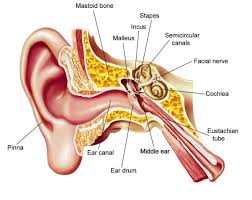
Has anyone else seen this thing? I’m pretty sure it is a requirement to graduate from medical school –  that there is a mandatory, government issued agreement that you have to sign before you receive your doctorate to ensure that you hang this striking piece of unnerving wall art on the walls of your exam rooms.   

I am yet to find myself in a doctor or audiologist office where one of these has not been hanging in a place of prominence – frequently laced with hues of yellow from aging.  (They are never in new, pristine condition…is that also a requirement?)

Forgive my digression, but I have spent literally hours staring at this poster trying to unravel the mystery of the ear and what is happening deep inside the dark caverns of my own as the nerves continue to die on me with an increasing acceleration.  As a kid, I would look at all of the “yellow stuff” (my own technical medical terminology) and conclude that inside our ears was a magic, untapped reservoir of peanut brittle or melted butterscotch candy that stiffly and slowly puttered along some unknown passageway.  As an adult, I’m still not 100% sure what it actually is – and am absolutely fine not knowing…it is a little gross.

I have found that the best time to sit and examine this work of abstract art is when I am sitting inside The Booth.  Have you ever been in The Booth? Add it to your bucket list, it is not to be missed! How could anyone pass up the opportunity to be bolted inside what essentially looks like a dried out meat locker for the purpose of having a hearing test? 

As a child – and, admittedly, as an adult – being inside The Booth conjures up fantastical dreams of aliens, spaceships, and galactic adventures.  Even now, I still feel like maybe, just maybe, this is it – a seemingly normal day when I came into the booth for a routine hearing test, but will actually be abducted by aliens because The Booth is a spaceship!  Trust me, this makes perfectly logical sense when you are sitting within this giant metal cube with speckled holes poked into the walls. Not yet convinced? Well – the massive door is heavy and it lets out a satisfying THUNK when it shuts, and then the door handle clicks into place (or is it a lock?) and you can’t help but feel that you are being held captive!  (My overly active imagination and ADHD comes in handy in situations such as these).

As exciting as it is to be carried away in your mind on an alien abduction, as an adult it has become mildly unsettling to sit inside this thing and wait for something to happen.  You know that The Test is coming. Even as I am writing this – my mouth is getting a little dry, and my palms are getting a little sweaty – the only thing dependable for me with a hearing test is this mild anxiety attack that accompanies it! 

The Voice happens a few moments later, unexpectedly – first this crackle of static and then “CAN YOU HEAR ME? WE WILL BEGIN THE TEST NOW!”  I jump every time – because The Voice seems to wait to pronounce its arrival right at the peak of the anxiety attack that is creeping in at a rapid pace.  (I have – for years – wanted to respond back with “ARE YOU THE GREAT AND POWERFUL OZ?” – maybe next time.)

The Voice is a little demanding, and states that The Tasks will now begin – which requires my maximum level of attention (add ADHD in there with my wild creativity and compromised hearing, well…my attention is never really at maximum level).

The first test begins – with the first direction from The Voice stating, “Raise your hand when you hear the beep”.  Pretty straightforward, can’t really mistake the expectations for this one, feeling pretty confident about my motivation and participation, no problems here.  I’m ready to rock out and nail this raising hand activity all in the name of the beeps.

I sit and wait, eagerly anticipating The Beeps.  A minute ticks by…then another…and another. I snap my fingers next to my ears, making sure that the hearing aids are in solid, working order and discover no problems.  Another minute ticks by…and now I’m starting to fidget, and I begin to hum to myself (usually “The Battle Hymn of the Republic” for reasons that remain unknown) and the claustrophobia starts to set in along with the realization that maybe I really HAVE been abducted by aliens.  The logical mind finally arrives and overpowers the spiral that I have now begun and I realize that I can “use my words” to ask The Voice exactly what is going on – finally putting to good use the advice I impart to my students.

I state – with cheer, force and authority to The Voice – “Hello! Is this thing working? Are you having a problem with The Beeps?” 

(Insert dramatic pause)

And then The Voice responds, “No problems on our end.  The test has been running for the past few minutes. Unfortunately, you are not hearing any of the beeps in the high frequency range.  Please continue to listen for the beeps and raise your hand. Thank you.”

Oof. Even for The Voice that was cold, heartless, and blunt.  

I imagine that Most People would feel overwhelmed with grief, trepidation, sadness or perhaps panic at this new information.  But – for better or worse – I am most decidedly not Most People. I burst out laughing. I was in near hysterics upon hearing that news from The Voice because I have been blessed (and cursed) with the ability to “find the funny” in literally any situation, however inappropriate.  

I ask that we all remember this – that if you look closely enough, in even the most dire of times – there is comedy hidden within its depths.  If you can smile in the face of what feels overwhelming, frightening and difficult – then you have found the window of hope, light and joy for times ahead.

Thank you for reading – and, if you have a hearing test coming up soon, remember – it could well be an alien abduction!